The Loneliness Economy: Belonging as Next Trillion-Dollar Market
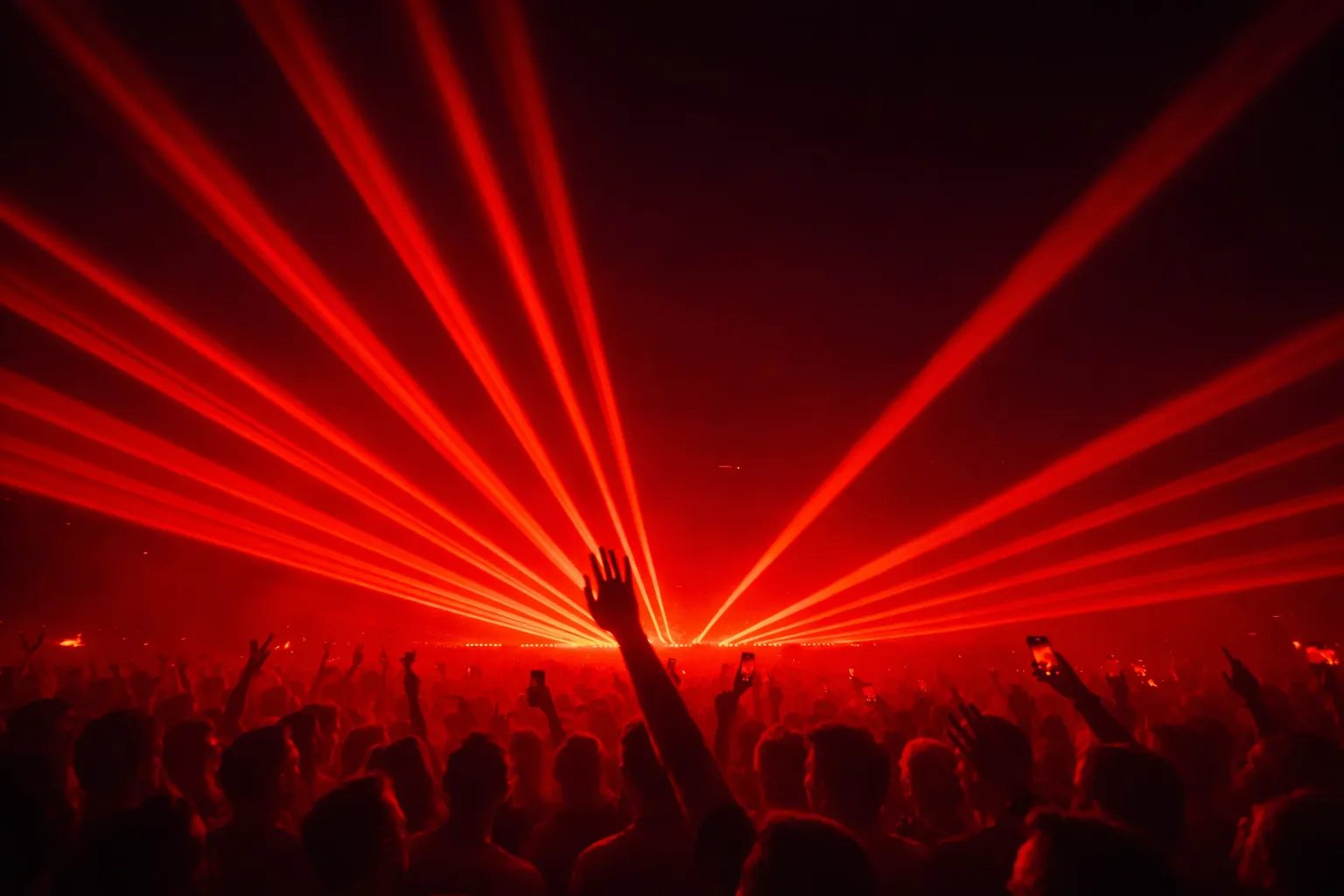
Loneliness is now a global health crisis. The companies that solve for belonging, not just connection, will define the next era of technology.
Loneliness is now a public health crisis on the scale of smoking and obesity, linked to 871,000 deaths annually and costing the US economy over $154 billion a year in lost productivity alone. But it is also a market signal. The companies that figure out how to create genuine belonging (not just connection, not just content, not just community features) will build the defining platforms of the next decade.
I know something about loneliness. My family escaped to the US from Cambodia when I was seven, after surviving land mines in the jungle and two years in refugee camps in Thailand and the Philippines. After we arrived, we endured years of forced labor before being rescued. I moved two to three times a year as a child, wherever my grandmother could find seasonal work. As an ESL kid with a hyperactive imagination and pastel sweatsuits from the flea market, I was always the outsider. I didn’t fit in anywhere. The feeling of being fundamentally separate from the people around me was the defining sensation of my childhood.
That feeling is why I spent twenty years producing events. And it’s why I’m now building a technology platform whose core thesis is that belonging, when designed well, can compound.
This essay is about the collision between a global health crisis and a market opportunity. It’s about why the loneliness epidemic isn’t just a social problem but an economic one, why the platforms we built to solve it made it worse, and what the architecture of belonging might actually look like.
How big is the loneliness epidemic?
In 2023, US Surgeon General Vivek Murthy issued an 82-page advisory declaring loneliness and social isolation an epidemic, calling it a public health threat comparable to smoking and obesity. The data that prompted the advisory was staggering. Approximately half of US adults reported experiencing loneliness. Social isolation increases the risk of premature death by 29%. It increases the risk of heart disease by 29% and stroke by 32%. Among older adults, chronic loneliness raises the risk of dementia by approximately 50%.
The crisis has only deepened since then. In June 2025, the WHO Commission on Social Connection released a global report revealing that 1 in 6 people worldwide is affected by loneliness. The commission estimated that loneliness contributes to 871,000 deaths annually, roughly 100 deaths every hour. The economic costs are staggering: US employers lose $154 billion annually to loneliness-related absenteeism, productivity losses, and turnover. Social isolation among older Americans alone accounts for $6.7 billion in excess Medicare spending each year. In the UK, loneliness costs employers an estimated $3.2 billion annually.
A Gallup World Poll study covering 159 countries found that global social isolation prevalence increased 13.4% between 2009 and 2024, with the entire increase occurring after 2019. The pandemic didn’t create the loneliness crisis. It accelerated a trajectory that was already underway.
And here’s the detail that should concern anyone building technology: the people using social media the most are among the loneliest. A study cited in the Surgeon General’s advisory found that people who used social media for more than two hours daily had about double the odds of reporting social isolation compared to those who used it for less than thirty minutes. A 2026 national study of over 60,000 college students found that 54% of young adults report feeling lonely regularly. The heaviest social media users (30+ hours per week) were 38% more likely to report feeling isolated.
Why did the platforms built for connection make loneliness worse?
Social media was supposed to solve loneliness. That was the original promise: a world where distance was irrelevant and everyone was a click away from community. Instead, we built platforms that optimized for engagement metrics (time on site, clicks, shares) rather than for the quality of human connection those interactions produced. The result is what researchers call the digital paradox: as our virtual networks expand, our sense of genuine connection contracts.
The mechanism is well documented now. Passive scrolling, consuming content without contributing, is the most damaging form of social media use. It turns users into spectators of other people’s lives rather than participants in their own. Algorithms optimized for engagement feed users content that triggers outrage or insecurity, because those emotions keep people on the platform longer. Social comparison through curated feeds intensifies feelings of inadequacy. The person with 2,000 followers can feel lonelier than someone with none, because the gap between their performed life and their experienced life widens with every post.
A Deloitte consumer trends survey of over 4,000 people found that nearly a quarter of all consumers had deleted a social media app in the previous 12 months, rising to nearly a third for Gen Z. A CNBC report in early 2026 documented a “quiet revolution” of young people swapping social media for lunch dates, vinyl records, and even brick phones. This isn’t a trend piece. It’s a structural shift. The generation that grew up online is discovering that the platforms they were raised on don’t actually deliver what they need most.
55% of Gen Z have taken at least one social media detox in the past year to manage anxiety and digital fatigue. 66% report that social media impacts their mental health negatively. These are the core users of these platforms, and they’re increasingly opting out. That’s not a branding problem. That’s an architecture problem.
Why is belonging becoming a trillion-dollar market?
The loneliness economy is already estimated to be worth over $500 billion, spanning dating apps, friendship platforms, AI companionship tools, emotional wellness startups, and digital communities. But that figure understates the real opportunity, because it only captures the products explicitly marketed as loneliness solutions. The actual market for belonging is woven into the fastest-growing segments of the entire global economy.
The global wellness economy reached $6.8 trillion in 2024, growing at 7.9% annually, nearly double global GDP growth. Mental wellness is the second-fastest growing segment at 12.4% annual growth, with the US mental wellness market alone at $125 billion. The wellness economy is projected to reach $9.8 trillion by 2029. Within that, every category that touches social connection, from wellness tourism to fitness communities to meditation apps, is growing faster than categories that don’t.
Community-led growth platforms, the technology infrastructure being built to support belonging at scale, represent a $1.73 billion market growing at 19.4% CAGR. Companies with strong user communities grow revenue 2.1x faster than those without. Community-active customers have 30% higher retention rates and are twice as likely to enter upsell conversations (Gainsight). Every dollar invested in community returns an average of $6.40 in value.
But the most important market signal isn’t in any of these numbers. It’s in the behavior of the people leaving. When TikTok faced ban scares in early 2025, over 700,000 users migrated to RedNote in 48 hours. When TikTok’s new American owners faced censorship allegations in early 2026, UpScrolled hit #1 on the App Store almost overnight. These migrations aren’t about features. They’re about trust and belonging. People will leave a platform with a billion users to find one where they feel seen. That’s the market signal.
What twenty years of building belonging taught me
I’ve been thinking about belonging since before it was a market category. When I started producing events in San Francisco in my early twenties, I wasn’t trying to solve loneliness. I was trying to solve my own. I built the place that didn’t exist yet.
The events I produced were some of the first in San Francisco to blend genres, scenes, and art forms that the city’s culture kept separate. People came because they offered a kind of belonging that didn’t require them to pick a lane. Over twenty years, those events grew from a few hundred people to festivals of tens of thousands.
What I learned, and what I keep relearning in every company I’ve worked with since, is that belonging has a specific architecture. It’s not something that happens because you gather people in one place. It happens when you design for identity, contribution, ritual, and trust. The Eventbrite events with the highest return rates were the ones with the strongest sense of purpose. The AdRoll customers who became evangelists were the ones who felt like co-builders, not just users. The YouCaring donors who made JJ Watt’s Houston Flood Relief Fund the largest crowdfunding campaign in history ($37 million+) weren’t just generous. They felt like their $25 was part of something with their name on it.
Every one of those experiences taught me the same lesson: belonging is not a feature you bolt onto a product. It’s an architecture you build from the ground up.
What does the architecture of belonging actually look like?
Based on twenty years of building communities across events, gaming, SaaS, crowdfunding, aerospace, and Web3, I’ve identified five structural requirements for belonging at scale. I think of these as the Belonging Architecture:
1. Identity anchor. People need to feel like the community reflects something true about who they are or who they’re becoming. This is why Harley-Davidson’s Owners Group has maintained over a million members for decades, while most online communities fizzle in months. The HOG isn’t built around a product. It’s built around freedom, adventure, and a specific kind of self-image. The product is the entry point. The identity is the retention mechanism.
2. Contribution pathways. Belonging deepens when people can leave fingerprints on the culture. Salesforce’s Trailblazer Community reports that over 80% of active members say the community increased their ROI. That’s not because members read content. It’s because they earned status by helping others. LEGO Ideas turns fan designs into real products. The belonging comes from mattering, not just participating.
3. Rituals that create emotional memory. Peloton’s instructor shoutouts, milestone celebrations, and leaderboard high-fives aren’t engagement tactics. They’re rituals that create the feeling of “I was here, I belong here, I’m coming back.” Circle’s 2026 data shows 61% of creators now use async formats as a core engagement channel, and 21% are reducing live programming to prevent burnout. The communities that last are the ones with the strongest rituals, not the most activity.
4. Trust density over scale. Micro-communities deliver 2.3x higher engagement than large public groups (Meta, 2024). A community of 100 people who trust each other creates more value than a community of 100,000 strangers. The best nights I ever produced weren’t the biggest. They were the ones where the room was just full enough that everyone felt part of what was happening. Scale matters eventually, but coherence matters first.
5. Member-to-member meaning. The critical distinction between an audience and a community: in an audience, everyone looks at the founder. In a community, people look toward each other. Star Wars has one of the most massive audiences in entertainment history. But the real community, the cosplayers, the fan film makers, the convention organizers, exists independently of the franchise’s output. George Lucas understood this: the audience was massive, but the community is what made that audience loyal across decades.
Why is belonging the defining opportunity of the next decade?
Three forces are converging to make belonging the most important design challenge in technology.
The loneliness crisis is accelerating. Global social isolation increased 13.4% between 2009 and 2024. The WHO has formally declared social connection a global health priority. 74% of Gen Z report feeling regularly lonely. This isn’t a niche problem. It’s a civilizational one, and it’s creating massive demand for solutions that actually work.
The platforms people trusted are losing trust. Consumer enthusiasm for AI-generated content dropped from 60% to 26% in two years. Nearly a quarter of consumers deleted a social media app in the past year. Gen Z is actively leaving platforms that don’t serve their need for authentic connection. The incumbents are vulnerable in a way they haven’t been since the early smartphone era.
AI and Web3 make new architectures possible. AI can power content discovery that surfaces signal instead of noise, matching people based on genuine compatibility rather than engagement bait. Tokenized systems can align economic incentives between platforms, creators, and communities for the first time. The technology to build belonging platforms that actually work, where creators keep their revenue and fans are rewarded for genuine participation, is now available. It wasn’t five years ago.
This convergence is why I’m building Wondr. Not because the world needs another social platform. Because the world needs a platform built for belonging, where the economics reward depth over extraction and where AI serves human connection rather than undermining it.
• • •
The loneliness epidemic is not going to be solved by another app that optimizes for time on screen. It’s going to be solved by companies that understand the difference between connection and belonging, and that have the courage to build for the latter even when the former is easier to measure.
I’ve spent my life crossing the distance between isolation and community. That distance is why I build what I build.
That’s not just a personal story. It’s a design philosophy. And I believe it’s the most valuable one in technology right now.
• • •
If this resonated:
For investors: Wondr is building the belonging platform for the ownership economy. If you believe the next great platform will be built for depth rather than extraction, I’d welcome the conversation.
For founders: If you’re building something that touches community, belonging, or the creator economy, I work with early-stage companies on exactly this through Wondr Venture Studio and fractional CMO engagements.
For everyone: Subscribe for essays like this, or share it with someone who’s thinking about what comes after social media.
• • •
About the Author:
Maly Ly is the Founder & CEO of Wondr, an AI-native social and discovery platform, and the founder of a growth lab advising early-stage startups. She is a founder, growth executive, and operator who has helped scale multiple startups to breakout growth and unicorn status across AI, Web3, aerospace, SaaS, and consumer tech.
Her experience includes leadership roles at category-defining companies such as AdRoll—named the Inc. 500’s #1 Fastest Growing Marketing Company—and Relativity Space, which reached a $2.3 billion valuation and became the second most valuable private space company after SpaceX. She has also held leadership positions at Eventbrite, Sojern, YouCaring (later acquired by GoFundMe), and SecurityPal AI, and earlier in her career helped launch top-selling products for franchises including Star Wars, Tomb Raider, and Nintendo.
Beyond tech, Maly spent two decades producing art, music, and both corporate and underground events, while leading digital campaigns for global brands including Mercedes-Benz, Aston Martin, Burberry, and Williams Sonoma. She is also a Certified High Performance Coach.
Her work has been recognized by Forbes, Fast Company, and Direct Marketing News with its Hall of Femme honor. She and her work have been featured in The New York Times, The Washington Post, CNN, NPR, Forbes, The Tonight Show, and The Ellen Show.

How I Turned an Unknown Startup into the #2 Most Valuable Private Space Company
A case study in brand positioning, category creation, and the decisions that compound. The most important marketing decision a startup will make isn’t about channels or budget. It’s about the story. I learned this at every company I’ve worked with, but nowhere more dramatically than at Relativity Space, where the right positioning took an unknown company to a $2.3 billion valuation.

The Great Platform Betrayal: Why People Are Done Being the Product
The $252 billion creator economy underpays the people who create its value and exploits the fans who make it valuable. Both sides are starting to leave. The creator economy is worth an estimated $252 billion and growing at over 20% annually. More than 207 million people worldwide now identify as content creators. Influencer marketing alone hit $32.55 billion in 2025, a 35.6% jump from the year before. By every aggregate measure, this industry is booming.

The Taste Advantage: Curation as Most Valuable Skill in the Age of AI
Taste, the ability to discern what is good from what is merely competent, is becoming the scarcest and most valuable skill in business. AI can now generate 34 million images a day. Over half of new web content is AI-written. Europol estimates that 90% of online content may be synthetically generated by 2026. When production is infinite and nearly free, the bottleneck moves from “can we make this?” to “should we make this?” And that second question is a question of taste.

Narrative Capital: The Most Undervalued Asset in Tech
Narrative Capital is the accumulated value of a company’s story: its coherence, its emotional resonance, its ability to make people act. Like financial capital, it compounds over time. Unlike financial capital, most founders don’t know they’re building it, burning it, or failing to accumulate it at all. And in a market where AI can generate infinite content but consumer trust in that content is collapsing (from 60% enthusiasm to 26% in just two years), the ability to tell a story that people actually believe has become one of the scarcest competitive advantages in business.