The Great Platform Betrayal: Why People Are Done Being the Product

The $252 billion creator economy underpays the people who create its value and exploits the fans who make it valuable. Both sides are starting to leave.
The creator economy is worth an estimated $252 billion and growing at over 20% annually. More than 207 million people worldwide now identify as content creators. Influencer marketing alone hit $32.55 billion in 2025, a 35.6% jump from the year before. By every aggregate measure, this industry is booming.
But look underneath the headline numbers and a different picture emerges. Over 50% of creators earn less than $15,000 a year. Only 4% cross $100,000. 57% of full-time creators earn below a living wage from platform revenue alone. TikTok, which generated between $20 and $26 billion in global revenue in 2024, pays creators roughly $20 to $50 per million views. The platform captured billions. The people who made it worth visiting captured almost nothing.
It’s not a distribution problem. It’s not a monetization feature that hasn’t shipped yet. It’s an architecture built to extract value from the people who create it. And after two decades of escalating evidence, creators, fans, and a growing number of investors are starting to recognize the betrayal for what it is.
I’ve watched this dynamic from multiple vantage points, and the thing that made it click wasn’t any single experience. It was the accumulation. Running digital campaigns for Mercedes-Benz and Williams Sonoma, where the platforms captured the data, the brands captured the conversion, and the creators who made people stop scrolling captured a fraction of either. Scaling Sojern to $10 billion in brand revenue through the programmatic advertising engine that powers the extraction model itself. Then watching community-first models at Eventbrite and YouCaring demonstrate that when the economic architecture rewards participation, everything about the relationship changes. The platforms were never designed to share. They were designed to capture. And once you see that pattern, you can’t unsee it.
How does the extraction architecture actually work?
You can’t understand why creators get underpaid without understanding the business model that funds the platforms they work on. Social media platforms are advertising businesses. Full stop. Their product is attention. Their customers are advertisers. Creators are the supply chain that generates the attention, but they’re not the customer and they’re not the beneficiary. In economic terms, they’re the raw material.
Look at the numbers. TikTok’s parent company ByteDance generated an estimated $12.8 billion in global app revenue by March 2025. TikTok’s US ad revenue alone is forecast to exceed $23.6 billion in 2025. Yet TikTok pays creators between 2 and 4 cents per 1,000 views through its programs. A video with a million views earns $20 to $40. The creator generates the content that generates the attention that generates the ad revenue, and they receive a fraction of a percent of the value they created.
YouTube is more generous by comparison, paying creators 55% of ad revenue, which works out to roughly $2 to $25 per 1,000 views depending on the niche. But even YouTube’s model keeps 45% of the revenue generated by other people’s creative work and retains full control of the algorithm that determines who gets seen. Instagram pays $0.50 to $2.50 per 1,000 Reels views through bonuses. Spotify pays artists between $0.003 and $0.005 per stream, meaning a million streams generates roughly $3,000 to $5,000 for the artist.
The upshot: nearly 70% of creator income now comes from brand deals, not from the platforms where creators build their audiences. Creators have effectively become freelance advertisers, dependent on brand partnerships because the platforms that host their work don’t pay enough to live on. The platforms captured the audience. The brands rent access to it. The creator does the creative work and absorbs the economic risk.
What about the people on the other side of the screen?
The extraction doesn’t stop with creators. Fans and users are being exploited by the same architecture, just through a different set of mechanisms. And the damage is arguably worse, because it’s harder to see.
Your feed is no longer yours. What users see on social media in 2026 is increasingly determined by what generates ad revenue, not what creates value for the person scrolling. Instagram organic reach fell 30% to 40% across every post format in 2025, including Reels (Emplifi). The content that does appear is increasingly synthetic: over 50% of new web articles are now AI-written, and Europol estimates 90% of online content may be synthetically generated by 2026. Meanwhile, 62% of all online information is now considered false or unreliable. Users are scrolling through a feed that is part ads, part algorithmic manipulation, part AI-generated filler, and part misinformation. The content they actually want to see from people they actually care about is buried underneath all of it.
You can’t tell who’s real. More than half of all internet traffic in 2024 was non-human, with 37% being malicious bots (Imperva). On social media specifically, 20% of chatter around global events comes from bots (Nature, 2025 study of 200 million users). Instagram has an estimated 95 million fake accounts. Deepfakes grew from roughly 500,000 online in 2023 to 8 million in 2025, an increase of nearly 900% (DeepStrike/Fortune). Young adults aged 18 to 24 now encounter an average of 3.5 deepfakes per day. So users can’t reliably distinguish human content from bot-generated noise, real people from fake profiles, or authentic endorsements from manufactured engagement. Reputation and credibility on these platforms is bought and manipulated, not earned. When you can’t tell who is real, you can’t trust what you see. And when you can’t trust what you see, the platform stops being useful for the one thing it was supposed to do: connect you to other people.
You’re the product, and the scammers know it. Social media is now the #1 contact method for scams in the United States, costing users $3.8 billion in 2024 alone (FTC). Scam victimization rates doubled from 31% to 62% in a single year (F-Secure). Meanwhile, 76% of Americans don’t trust social media companies to protect their personal data. The platforms harvest everything: browsing behavior, location data, purchase patterns, political views, emotional states. This data is sold to advertisers, shared with third parties, and used to train AI models, often without meaningful consent. 81% of US adults believe their data will be used in ways they are not comfortable with (Pew Research). Users are not customers. They are inventory.
Discovery is broken, by design. The algorithms that determine what you see are optimized for engagement, not relevance, meaning, or human connection. They surface content that triggers reaction (outrage, envy, anxiety, FOMO) because reactive content keeps people on the platform longer, which generates more ad impressions. 82% of Instagram creator accounts have fewer than 10,000 followers, which means the vast majority of creators are invisible to the fans who would value their work most. Users can’t find the people, communities, conversations, or content that are actually relevant to their lives. The algorithm isn’t helping them discover. It’s herding them toward whatever keeps them scrolling.
Instead of connection, users get isolation. The US Surgeon General’s Advisory found that people who use social media for more than two hours daily have double the odds of reporting social isolation. 66% of Gen Z say social media negatively impacts their mental health. The majority of Gen Z actively want to spend less time on their devices (Hootsuite 2026 Trends). These platforms were supposed to connect people. Instead, they’ve turned users into passive consumers of algorithmically served content, which is the opposite of what creates real belonging. Research consistently shows that people feel more connected when they participate and contribute, not when they passively observe. But the current architecture optimizes for passive consumption, because passive consumers generate more ad impressions than active participants.
And fans who do engage have no stake in the value they create. A fan who has been supporting a creator since day one, sharing their content, recruiting other fans, and contributing to the community, receives the exact same economic benefit as someone who showed up yesterday: zero. Their engagement generates data, trains the algorithm, increases visibility, and makes the platform more valuable. None of that value flows back. There is no ownership, no stake, no economic relationship, and no recognition that scales with contribution. The incentives are completely misaligned.
And that’s the half of the story that most creator economy analysis misses. The problem isn’t just that creators are underpaid. Both sides of the relationship are being extracted by a platform that sits between them and captures the economics of the connection.
The creator makes the content. The fan makes the content valuable. The platform makes the money.
What happens when the platform you built your life on disappears?
The fragility of this arrangement becomes visible every time a platform stumbles. In January 2025, when TikTok faced a potential US ban, over 700,000 users migrated to RedNote in 48 hours. The app surged to the top of the US App Store. Creators who had built their entire businesses on TikTok suddenly faced the possibility that years of work, millions of followers, and established revenue streams could vanish overnight because of a geopolitical decision they had no part in.
The pattern repeated in early 2026. After TikTok’s new American ownership group (led by Larry Ellison’s Oracle) took control, users accused the platform of suppressing certain content. UpScrolled, a Palestinian-founded alternative, hit #1 on the App Store almost overnight. Creators didn’t leave because of features. They left because they felt the platform they’d built their lives around could no longer be trusted to show their work.
These migrations reveal something the aggregate market numbers obscure: creators own nothing. Not their audience data. Not their algorithmic reach. Not the economic relationship with their fans. They rent access to an audience that the platform can throttle, suppress, or eliminate at any time, for any reason. Every creator on TikTok, Instagram, or YouTube is one algorithm change away from losing half their reach, one policy update away from demonetization, one geopolitical event away from losing their entire business. And they have no recourse, no equity, no governance rights, and no alternative that offers the same scale. That’s not a partnership. It’s a dependency.
A Deloitte consumer trends survey found that nearly a quarter of all consumers had deleted a social media app in the previous 12 months, rising to nearly a third for Gen Z. The exits aren’t slowing down. They’re accelerating.
Meanwhile, consumer trust in the content these platforms produce is collapsing. Enthusiasm for AI-generated content dropped from 60% to 26% in just two years (Billion Dollar Boy/Censuswide). 52% of consumers say they would trust a brand less if its content was purely AI-generated. The platforms are simultaneously underpaying the humans who create real content and flooding the feed with synthetic content that audiences increasingly distrust. Both trends point in the same direction: the current architecture is failing the people on both sides of the screen.
Why hasn’t the market corrected this?
If the extraction is this obvious, why hasn’t a competitor solved it? Because the business model itself is the problem, and you can’t fix an extraction architecture by building a nicer version of it.
Every major social platform is funded by advertising. Advertising requires maximizing time on site, which requires algorithmic control of what users see, which requires the platform to own the relationship between creator and audience. The moment a platform gives creators direct economic relationships with their fans, the platform loses its ability to insert itself as the monetization layer. The incentives are structurally misaligned, and they have been since the first social network sold its first ad.
Patreon was the most promising early attempt, giving creators direct subscription relationships with fans. But Patreon operates as a layer on top of existing platforms. Creators still need TikTok or YouTube to build the audience they then try to convert. Discovery happens on the extraction platform. Monetization happens on Patreon. The creator runs two businesses. And Patreon’s average monthly payout across 300,000+ creators works out to about $80 per creator per month. The model improved the economics at the margin. It didn’t change the architecture.
Substack came closer by combining discovery and monetization in one place for writers. But Substack is fundamentally a publishing tool, not a social platform. It works for a specific type of creator (writers with existing audiences) and doesn’t address the broader problem of how fans and creators interact, discover each other, and build community.
The creator economy’s M&A market confirms the appetite for change: 81 transactions closed in 2025, up 17.4% year-over-year, with infrastructure businesses (payments, analytics, monetization tools) becoming prized acquisition targets. Investors are betting on the tools that serve creators. But the underlying platform architecture, the thing that determines who captures the value, remains largely unchanged.
What does the ownership economy actually look like?
The alternative to the extraction model is what I call the ownership economy: a platform architecture where creators retain a high percentage of the revenue they generate, fans are economically rewarded for the engagement and content they contribute, and the economic incentives between platform, creator, and community are aligned rather than adversarial.
For creators, this means keeping the majority of the revenue their work generates, owning the relationship with their audience (not renting it from an algorithm), and building on a platform whose success is tied to theirs rather than extracted from it.
For fans, the shift is equally fundamental. In the ownership economy, the fan who shares a creator’s work, recruits new community members, contributes UGC, or participates consistently isn’t invisible labor anymore. They earn for their engagement. They have a stake in the communities they help build. Discovery is powered by AI that matches people to content, communities, and conversations they’ll genuinely value rather than content that maximizes ad impressions. Identity is verified and authentic, so you know who’s real. Reputation is earned through contribution, not bought through bots. Data stays with the user, not an ad engine. And the experience is designed to make people active participants and contributors rather than passive consumers, because participation is what creates the connection and belonging that people came to social media looking for in the first place.
This isn’t theoretical. The building blocks exist. Tokenized economic systems can create direct value exchange between creators and fans without a platform intermediary capturing the majority. AI-powered discovery can match people based on genuine interest and compatibility rather than engagement bait, solving the broken-discovery problem that buries 82% of creators below 10,000 followers. Community-led growth models (which now represent a $1.73 billion market growing at 19.4% CAGR) have proven that platforms built around participation rather than extraction can generate strong, sustainable business outcomes.
Adjacent markets tell the same story. Companies with strong user communities grow revenue 2.1x faster than those without. Community-active customers have 30% higher retention (Gainsight). Every dollar invested in community returns $6.40 in value. Circle’s 2026 data shows creators are already optimizing for depth over scale, with 12% capping membership to preserve quality. The market is moving toward ownership. It just doesn’t have the platform infrastructure to do it at the scale of a TikTok or Instagram.
That’s the thesis behind what I’m building at Wondr: an AI-powered social platform where the economic architecture is designed from the ground up around ownership rather than extraction. Where creators keep a high percentage of their revenue. Where fans earn for genuine engagement rather than being mined for data. Where discovery is powered by AI that serves human connection rather than advertiser targeting. The technology to build this is now available. The market demand is unmistakable. Whether the next wave of platforms will have the courage to build a different economic model rather than replicating the one that’s failing.
Why does this matter now?
Several forces are making 2026 the inflection point. And they’re reinforcing each other.
The creator class is professionalizing and demanding better economics. 25% of full-time creators now operate three or more revenue streams, earning $75,000 more on average than those relying on a single source. YouTube creators earn a median of $141,000, TikTok creators $131,000, Instagram creators $105,000. But these are the top performers. For the vast majority, the economics don’t work, and the gap between platform revenue and creator revenue is widening. Professionalizing creators are the most likely to leave platforms that don’t share value. They’re also the most likely to bring their audiences with them.
Platform trust is eroding faster than platform features can compensate. The TikTok ban scares. The UpScrolled migration. The RedNote exodus. Gen Z deleting social apps at unprecedented rates. 55% of Gen Z have taken a social media detox in the past year. These aren’t isolated incidents. They’re symptoms of a structural trust deficit that no amount of new features will fix, because the distrust isn’t about the product. It’s about the model.
The convergence of AI and tokenized economics makes new architectures viable. Five years ago, building an ownership-economy platform was technically difficult and economically unproven. Today, AI can power intelligent content discovery at scale. Tokenized systems can distribute value transparently. Community-led growth models have been validated across thousands of businesses. The infrastructure exists. The only thing missing is a platform that puts it together with the same ambition and scale that the extraction platforms brought to advertising.
• • •
The great platform betrayal is not a conspiracy. Nobody sat in a room and decided to underpay creators or exploit fans. What happened is simpler and, honestly, harder to fix: the extraction architecture emerged from a business model that optimized for one thing (advertising revenue) and treated everything else (creator welfare, fan agency, content quality, trust, belonging) as externalities. The result was a $252 billion industry where the majority of creators can’t make a living and the majority of fans feel worse after using the product.
I’ve spent my career at the intersection of brand, technology, community, and growth. I’ve worked inside the advertising machine and seen what it optimizes for. I’ve built communities from zero and watched what happens when the economic architecture rewards participation rather than extraction. The pattern is clear: when you align incentives between the people who create value and the platforms that distribute it, everything gets better. Retention. Quality. Trust. Growth. The extraction model produces impressive aggregate numbers. The ownership model produces something more durable: loyalty that compounds.
The next great platform won’t be built by replicating the ad-funded model with better algorithms. It will be built by someone willing to redesign the economic architecture from the ground up. That’s not a prediction. It’s a project.
• • •
If this resonated:
For investors: The ownership economy is the investment thesis behind Wondr. If you believe the next great platform will be built for creators and fans rather than against them, I’d welcome the conversation.
For creators: If you’re tired of building your business on rented land, join the early Wondr community. We’re building the platform you deserve.
For founders: If you’re building in the creator economy, community space, or ownership economy, I work with early-stage companies on growth, positioning, and community architecture through Wondr Venture Studio and fractional CMO engagements.
For everyone: Subscribe for essays like this, or share it with a creator who needs to know there’s something better coming.
About the Author:
Maly Ly is the Founder & CEO of Wondr, an AI-native social and discovery platform, and the founder of a growth lab advising early-stage startups. She is a founder, growth executive, and operator who has helped scale multiple startups to breakout growth and unicorn status across AI, Web3, aerospace, SaaS, and consumer tech.
Her experience includes leadership roles at category-defining companies such as AdRoll—named the Inc. 500’s #1 Fastest Growing Marketing Company—and Relativity Space, which reached a $2.3 billion valuation and became the second most valuable private space company after SpaceX. She has also held leadership positions at Eventbrite, Sojern, YouCaring (later acquired by GoFundMe), and SecurityPal AI, and earlier in her career helped launch top-selling products for franchises including Star Wars, Tomb Raider, and Nintendo.
Beyond tech, Maly spent two decades producing art, music, and both corporate and underground events, while leading digital campaigns for global brands including Mercedes-Benz, Aston Martin, Burberry, and Williams Sonoma. She is also a Certified High Performance Coach.
Her work has been recognized by Forbes, Fast Company, and Direct Marketing News with its Hall of Femme honor. She and her work have been featured in The New York Times, The Washington Post, CNN, NPR, Forbes, The Tonight Show, and The Ellen Show.

The Great Trust Recession
48% of people now question the authenticity of almost everything they see online. Researchers are calling it The Great Trust Recession. When I read that stat, I didn’t feel surprised. I felt responsible. I’ve spent twenty years inside the systems that produced this outcome. I understand exactly how we got here. And that’s why I’m building the alternative.

The Data Moat Playbook: What Sojern's $10B Transformation Can Teach AI Startups
How I repositioned Sojern from a boarding pass ad company into a $10 billion performance marketing platform, and what it taught me about data moats, identity pivots, and outpunching your weight. Most companies outgrow their original identity before the market notices. The product that got them started, the positioning that made sense at launch, stops being big enough for what the company has actually become. The hardest part isn’t seeing the bigger opportunity. It’s getting the market to let go of who they think you are so they can see who you’ve become. That’s the transition I led at Sojern, and it’s the one I see AI startups struggling with right now as their markets mature faster than their positioning.

How We Built an Inc. 500 #1 Fastest-Growing AdTech Startup in America
What the first wave of machine learning can teach AI startups about winning in a crowded market. When a technology is new, the best product wins. When the technology commoditizes, the best story wins. The tricky part is knowing which phase you’re in, because most founders figure it out too late.

How I Launched the Largest Crowdfunding Campaign in History
The most successful marketing campaigns don’t start with a strategy deck. They start with a collision between a real human need, the right messenger, and a team that knows how to turn attention into action. That’s what happened with JJ Watt’s Houston Flood Relief Fund, which raised $41.6 million from over 209,000 donors and became the largest crowdfunding campaign in history. I was the CMO at YouCaring when we launched it, and this is the story of the decisions that made it work.
How I Turned an Unknown Startup into the #2 Most Valuable Private Space Company
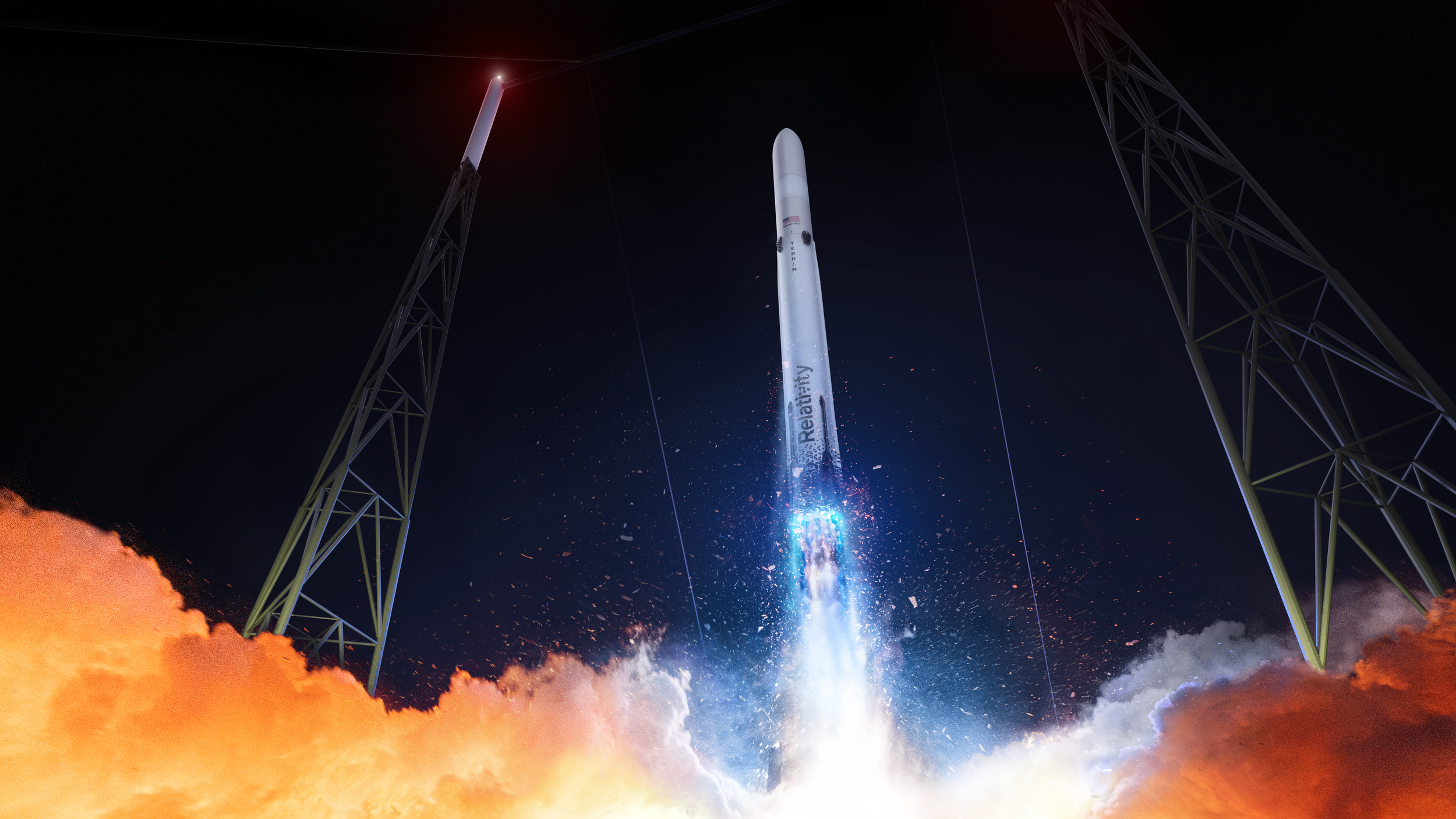
A case study in brand positioning, category creation, and the decisions that compound. The most important marketing decision a startup will make isn’t about channels or budget. It’s about the story. I learned this at every company I’ve worked with, but nowhere more dramatically than at Relativity Space, where the right positioning took an unknown company to a $2.3 billion valuation.

The Taste Advantage: Curation as Most Valuable Skill in the Age of AI
Taste, the ability to discern what is good from what is merely competent, is becoming the scarcest and most valuable skill in business. AI can now generate 34 million images a day. Over half of new web content is AI-written. Europol estimates that 90% of online content may be synthetically generated by 2026. When production is infinite and nearly free, the bottleneck moves from “can we make this?” to “should we make this?” And that second question is a question of taste.
The Loneliness Economy: Why Belonging is the Next Trillion-Dollar Market
Loneliness is now a public health crisis on the scale of smoking and obesity, linked to 871,000 deaths annually and costing the US economy over $154 billion a year in lost productivity alone. But it is also a market signal. The companies that figure out how to create genuine belonging (not just connection, not just content, not just community features) will build the defining platforms of the next decade.

Narrative Capital: The Most Undervalued Asset in Tech
Narrative Capital is the accumulated value of a company’s story: its coherence, its emotional resonance, its ability to make people act. Like financial capital, it compounds over time. Unlike financial capital, most founders don’t know they’re building it, burning it, or failing to accumulate it at all. And in a market where AI can generate infinite content but consumer trust in that content is collapsing (from 60% enthusiasm to 26% in just two years), the ability to tell a story that people actually believe has become one of the scarcest competitive advantages in business.