Tech With a Soul: How AI Can Make Us More Human
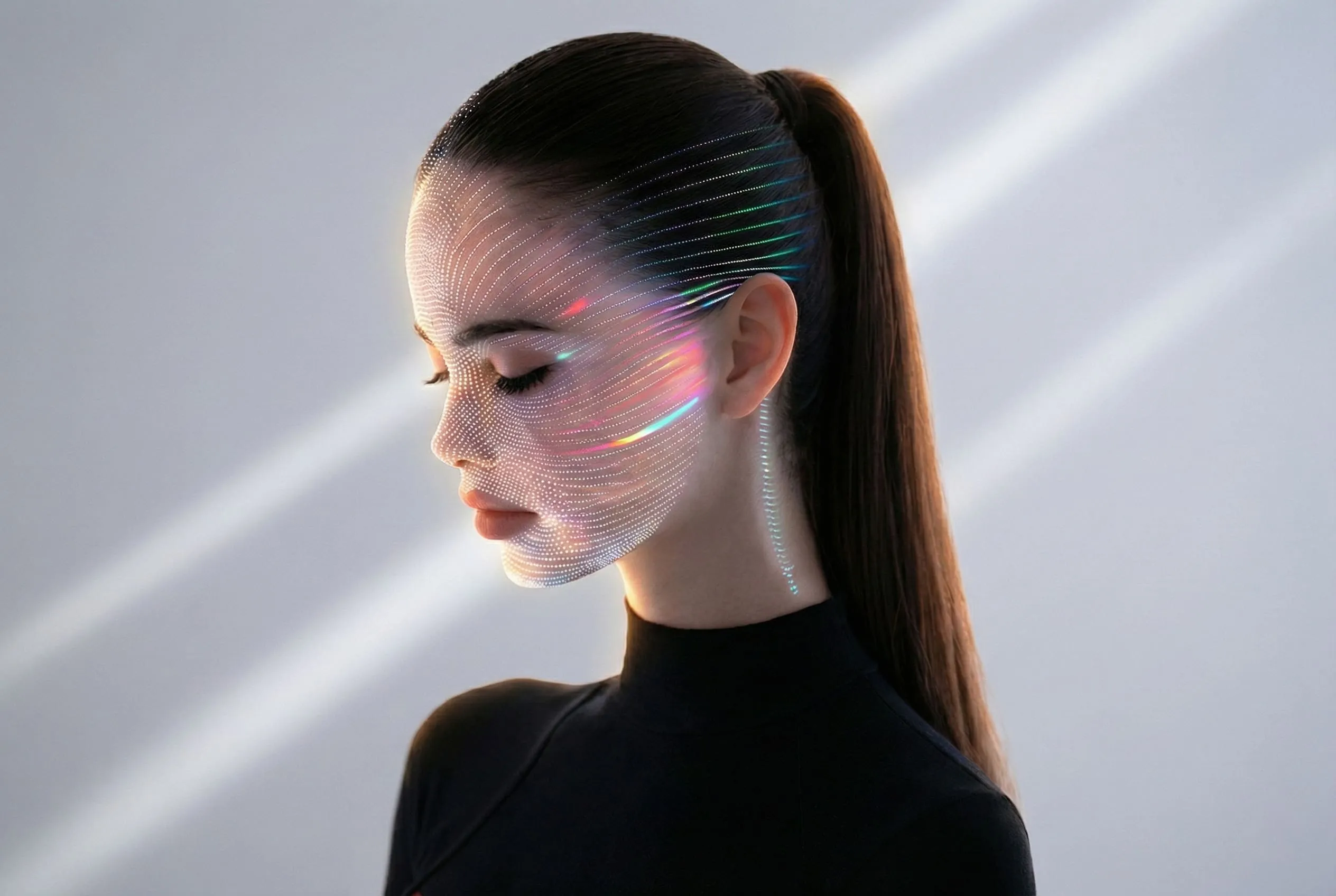
I have spent most of my life translating between worlds. As a child, I translated for my grandmother in American grocery stores while she searched for the foods she missed from Cambodia. As a teenager, I translated myself, from a refugee kid with broken English into a student who lived inside language. Later, as a marketer in Silicon Valley, I translated technology into something people could actually understand, not features or specs, but meaning.
Lately, I have found myself translating something even stranger: the relationship between humans and machines.
We are living in a moment when artificial intelligence can write a sonnet, score a film, generate a face that never existed, or mimic the voice of someone who has been dead for decades. It can also flood the internet with plausible lies written in perfect grammar. For all its promise, AI has left many people, especially creatives, wondering what will remain for us when machines learn to perform meaning.
After more than two decades building and scaling technology, I have come to a different conclusion. The future does not replace us. It reveals us.
AI is not here to make us less human. It is here to remind us what only humans can do.
The Real Frontier Is Emotional
In 2017, while leading marketing at Relativity Space, I watched engineers use machine learning, robotics, and advanced manufacturing to 3D-print entire rockets. It was surreal. Yet what moved investors, partners, and the public was not the hardware. It was the story. A small group of people chasing an impossible idea, building rockets faster and cheaper than anyone thought possible.
The same lesson applies to AI.
The most powerful technology does not simply compute. It communicates. It stirs something in us. It is why Pixar movies make adults cry. It is why you still remember the sound of dial-up internet from your childhood. The tools change. The feelings do not.
Right now, AI tools like ChatGPT, Suno, and Runway are blurring the line between maker and machine. Earlier this year, the AI-powered artist Xania Monet debuted on the Billboard charts, the first of her kind to do so. Her lyrics were written by a Mississippi poet. Her voice was modeled by software. Her songs were streamed by thousands of people who may not even know she is not human. Some call it a gimmick. Others call it the end of human artistry.
I see something else. I see evidence that audiences crave emotion no matter where it comes from, and that the real art lies in how we design collaboration between humans and machines.
AI is not replacing creators. It is multiplying them.
But without systems that protect transparency, authorship, and credit, we risk turning the internet into a hall of mirrors, reflections without sources, output without origin.
The Crisis of Authenticity
We are not facing an AI problem. We are facing a trust problem.
According to Edelman’s 2024 Trust Barometer, social media is now the least trusted industry in the world. Pew Research shows that most Americans cannot reliably tell whether what they encounter online is real or synthetic. The World Economic Forum lists AI-driven misinformation among the top global risks of the next two years.
We have built machines that can generate infinite realities faster than we can verify them.
When I worked at YouCaring, later part of GoFundMe, I saw firsthand how fragile trust can be. A single fraudulent campaign could ripple through the media and damage an entire ecosystem. So we built guardrails. Human review loops. Verification checks. Systems that prioritized authenticity over speed.
That experience taught me something fundamental. Technology can scale empathy or erode it, depending on what it rewards.
AI builders face the same choice now.
Designing for Empathy, Not Efficiency
If I could offer one piece of advice to every founder building with AI, it would be this: optimize for feeling, not just function.
That principle shows up in a few concrete ways.
First, make provenance visible. TikTok, of all platforms, is quietly leading here through its partnership with the Content Authenticity Initiative, which allows creators to attach Content Credentials to media. These digital markers show how, where, and by whom something was created. Adobe, Microsoft, and others support the same C2PA standard. Think of it as a nutrition label for digital content. We may still consume junk, but at least we know what is in it.
Second, treat transparency as design, not compliance. Europe’s AI Act requires disclosure for AI-generated or manipulated media. Regulation is necessary, but it should never be the only reason to be honest. Imagine if AI-generated images, songs, or essays came with an optional making-of layer that revealed the human process behind them. Transparency is not bureaucracy. It is storytelling.
Third, design for participation rather than performance. Most platforms still measure success in clicks, views, and time spent. What if they measured contribution instead? At YouCaring, the campaigns that grew fastest were not the flashiest. They were the ones where people felt personally involved, where donors became advocates and supporters became storytellers. That is how audiences turn into communities.
Fourth, raise the floor without lowering the ceiling. Studies from MIT Sloan and Science suggest generative AI can increase creative output by up to forty percent while improving quality by nearly twenty percent. The opportunity is not to flood the world with more content. It is to give more people access to creative tools, then reinvest the time saved into taste, research, and imagination.
Stories That Still Shape Me
When I helped scale AdRoll into one of the fastest-growing marketing platforms in the world, the breakthrough was not an algorithm. It was translation. We took the complexity of adtech and made it simple, human, and actionable for businesses of all sizes.
When I worked on Star Wars games at Lucasfilm, we were not just pushing pixels. We were protecting myth, the idea that technology could evoke awe, not just adrenaline.
When we built Akash’s decentralized cloud, we did not sell compute. We sold freedom, the ability to run workloads without asking permission.
Each of those experiences reinforced the same truth. Technology without story is infrastructure. Technology with story becomes culture.
AI will be no different.
The real question is not whether machines can feel. It is whether they can help us feel more.
The Future of Tech Is Emotional Intelligence
If we do this right, AI will force us to rediscover the parts of ourselves we have neglected: empathy, nuance, intuition, and the slow work of meaning.
Even the largest foundation models are now hiring human editors, writers, and storytellers to teach them voice and context. The next great software companies will not only hire engineers. They will hire poets, psychologists, and philosophers. Not as a gimmick, but because the hardest problems in AI are not technical. They are emotional.
The best AI products will feel less like tools and more like collaborators. They will amplify creativity rather than automate it. They will expand our emotional range instead of compressing it.
The true measure of innovation will not be how lifelike machines become, but how alive they make us feel.
Technology has always been a mirror. AI is simply the most reflective one we have ever built. When we look into it, we should not see the end of humanity. We should see the beginning of a deeper version of it, one that values presence as much as progress, meaning as much as scale.
Because in the end, the soul of technology is not in the code. It is in the questions we choose to ask, and the care with which we ask them.
If this resonated, subscribe at MalyLy.com.
Or if you are building technology that touches people, ask yourself one simple question.
Does it make us feel?
In the long run, that is the only metric that matters.

How to Build a Movement, Not Just a Product
Every great company begins as a feeling. Before there’s a product, there’s a purpose. Before there’s a team, there’s a shared belief that something deserves to exist.That belief is what turns an idea into momentum and momentum into a movement.

The Future of Belonging: Building Communities That Scale Meaning
When I was a kid, belonging meant survival. In refugee camps, belonging meant the difference between being fed or forgotten. Later, in Silicon Valley boardrooms, belonging meant the courage to speak when I was the only woman, the only immigrant, or the only one who didn’t speak in acronyms.And now, in an age of algorithms and infinite connection, belonging has become something else entirely: the one thing technology can’t manufacture but keeps trying to.